
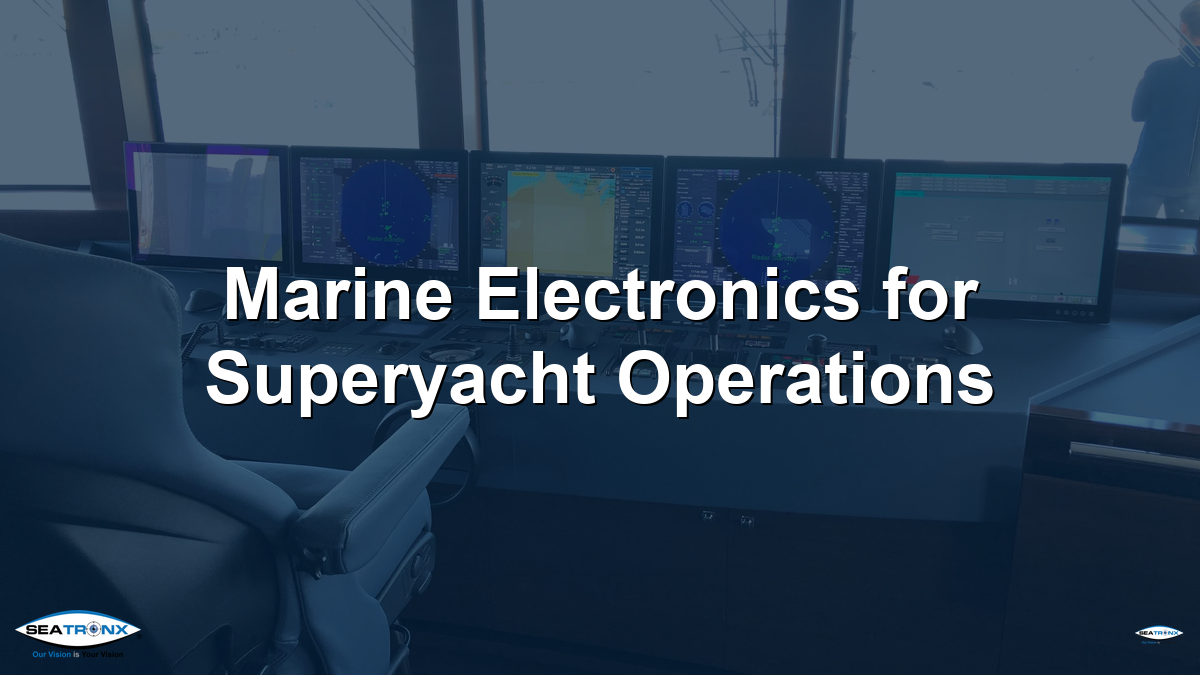
Superyacht marine electronics encompass the helm displays, marine computers, AIS transceivers, ECDIS navigation systems, VHF radio, and integrated camera networks that enable offshore charter vessels to operate safely, meet flag-state compliance requirements, and deliver the performance standards charter clients expect. When the 53.8-metre motor yacht Persefoni completed her extensive 2023 refit at Mariotti Yachts, the project illustrated how deeply the electronics specification drives long-term charter vessel performance – a reality that resonates with fleet managers and yacht builders across every market segment.
A vessel that falls short on bridge electronics will eventually show it – in compliance failures during a port inspection, crew fatigue from working around unreliable hardware, or guest experiences that do not match the vessel’s reputation. This post covers the core electronics systems a superyacht requires, explains why purpose-built rugged marine hardware outperforms consumer-grade alternatives offshore, and describes how the electronics specification process works for vessels preparing for a refit or new build.
What Marine Electronics Does a Superyacht Need?
A superyacht requires a layered electronics infrastructure that includes IEC 60945-rated helm displays, a networked marine computer for navigation processing, ECDIS or chartplotter systems, AIS transponders, VHF/DSC radio, and an integrated camera system covering the exterior hull, blind spots, and engine room. The specific configuration scales with the vessel’s size, operational area, and flag-state requirements.
For vessels in the 40-60 metre range operating internationally, every electronics decision at the helm carries implications for flag-state compliance, crew safety certification, and the charter guest experience. The IEC 60945 standard defines the environmental performance requirements that marine bridge equipment must meet, covering continuous exposure to saltwater spray, condensation, vibration, and temperatures from sub-zero to over 55 degrees Celsius. Consumer-grade displays and computers are not designed or tested to these requirements and are unsuitable as primary bridge equipment on a vessel conducting offshore passages. The core electronics systems every well-specified superyacht bridge relies on include:
- Helm displays: sunlight-readable flat-panel monitors with sealed enclosures, anti-reflective coatings, and touch or trackball input
- Marine computers: ruggedized fanless processing units handling navigation, NMEA network integration, and onboard systems management
- Chartplotters and ECDIS: digital navigation systems requiring reliable display output and stable computing platforms
- AIS transceivers: automatic identification system units broadcasting vessel identity, position, and course to nearby traffic
- VHF/DSC radio: primary communication and distress alerting equipment for offshore passages
- Camera networks: exterior hull cameras, blind-spot cameras, engine room monitors, and tender bay views feeding to helm displays
How Helm Displays Define Superyacht Bridge Performance
A superyacht helm display must remain readable in full sunlight, respond reliably to touch or trackball input in a moving sea state, and maintain consistent operation through the temperature swings that occur between tropical charter seasons and North Atlantic transits. The display is the primary interface between the navigation system and the crew, and a display failure at sea is not a minor inconvenience – it is a safety event requiring activation of backup navigation systems in the middle of an offshore passage.
Marine-rated displays are purpose-built for these conditions, with anti-reflective glass, sealed front bezels rated for water intrusion resistance, wide operating temperature ranges, and backlighting calibrated for visibility in direct tropical sunlight. Seatronx marine displays are built to these specifications – you can review the product line to see how the technical requirements translate to real-world bridge applications. Standard commercial monitors rated for office environments fail these requirements across multiple categories and typically show degraded performance within a single charter season at sea.
Why Do Superyacht Electronics Need to Be Ruggedized?
Superyacht electronics need to be ruggedized because the bridge environment on an offshore vessel exposes electronic components to saltwater spray, continuous vibration from engines and sea state, humidity exceeding 95 percent relative humidity, and thermal cycling that consumer electronics are not designed or tested to survive. Equipment meeting IEC 60945 has been independently validated against these conditions – equipment that has not may appear functional in calm anchorages and then fail when conditions demand most from the hardware.
Salt in the air accelerates connector corrosion, continuous vibration creates micro-fractures in solder joints, and humidity infiltrates enclosures lacking proper sealing. Research from military electronics programs consistently shows that uncontrolled environmental exposure – not component age – is the primary cause of premature electronics failure in marine deployments.
What Happens When Non-Ruggedized Hardware Is Used at Sea
Non-ruggedized electronics deployed in marine environments typically show early failure signs within months: backlight degradation, touchscreen response inconsistency, random reboots under vibration, and ultimately complete failure from corrosion or thermal stress. Charter operators often discover the true cost at the worst possible moment – hundreds of miles from the nearest service center. Purpose-built Seatronx marine computers use fanless sealed designs that eliminate the moving parts most vulnerable to vibration and contamination. The key performance gaps between consumer-grade and marine-rated electronics include:
- Water ingress resistance: marine displays carry IP65 or higher front-bezel ratings; consumer monitors carry no such protection
- Vibration tolerance: marine computers are tested to survive the vibration profiles of running at sea; consumer units are not
- Temperature range: IEC 60945-rated equipment operates from -15 to +55 degrees Celsius; consumer equipment typically has a 0 to +40 range
- EMC compliance: marine electronics are tested for compatibility with radar and radio systems operating at close range on the same vessel
- Corrosion resistance: marine enclosures use materials and coatings selected for saltwater environments; standard commercial enclosures corrode rapidly in these conditions
How Are Electronics Specified During a Superyacht Refit?
Electronics specification during a superyacht refit follows a structured process beginning with an audit of existing systems, identification of compliance gaps against current flag-state requirements, and selection of replacement hardware rated for the vessel’s intended operational profile and geographic range. The refit phase is when most superyachts receive their most significant electronics upgrades – vessels entering service with earlier-generation technology may need updated displays, new marine computers capable of running current navigation software, and upgraded camera systems with improved low-light performance.
According to industry reporting, superyacht refits in major shipyards average 12-18 weeks for vessels in the 40-60 metre range, with electronics work representing a significant portion of the total project scope. The specification process typically follows this sequence:
- Bridge audit: inventory of existing electronics by system age, certification status, and integration compatibility
- Compliance review: check of flag-state requirements and classification society rules for the vessel’s registry and operational area
- System design: selection of helm displays, marine computers, panel PCs, camera systems, and control hardware
- Integration planning: mapping new hardware onto existing NMEA 0183 and NMEA 2000 network infrastructure
- Installation and commissioning: physical installation, software configuration, crew training, and sea trial verification
Working with a Marine Electronics Supplier on Refit Projects
Working with a purpose-built marine electronics supplier during a refit ensures every hardware selection has the certifications, form factors, and support to meet the vessel’s specific requirements.
Seatronx marine panel PCs are designed with refit integration constraints in mind, offering configurable display sizes, mounting options suited for helm cabinetry, and direct factory support for application-specific requirements. If you are specifying electronics for an upcoming refit project, engaging the Seatronx sales team early in the planning process allows for a specification review that prevents costly mis-selections before hardware is ordered.
What Camera Systems Does a Superyacht Require?
A superyacht typically requires exterior hull cameras for docking assistance, blind-spot cameras covering the bow and stern quarters, engine room cameras for remote monitoring, and tender bay cameras for guest safety – all feeding to displays at the helm and secondary stations via a ruggedized marine camera network. A well-specified camera installation significantly reduces crew workload during high-stress maneuvers such as docking in a crowded marina, managing tender deployment in a swell, or anchoring at night.
According to US Coast Guard data, a significant percentage of vessel allisions and dock damage incidents involve restricted visibility from the helm – a risk that a properly configured camera network directly addresses. Modern superyacht camera installations include coverage for:
- Bow cameras for forward visibility in low-light conditions and restricted waterways
- Stern and quarter cameras for docking assistance and tender operations
- Engine room cameras for remote monitoring without requiring crew to leave the bridge
- Anchor watch cameras for monitoring anchor position from the deck or bridge overnight
- Guest safety cameras covering boarding ladders, swim platforms, and water toy deployment areas
How Camera Networks Connect to the Bridge Display System
Superyacht camera systems route live video to the helm display array through a marine-rated controller or digital video switching unit, allowing the captain and officer of the watch to access any camera view without leaving the navigation station. A mismatch in video protocols, signal formats, or display input capacity creates gaps in the situational awareness the system was designed to provide.
Seatronx camera systems are designed to integrate with marine display networks and deliver reliable video feeds under the thermal and vibration conditions of offshore operation. When evaluating camera options for a refit or new build, the Seatronx product catalog provides a full picture of the display, computer, and camera systems that can be specified together as a coherent bridge electronics package.
Equipping a superyacht with electronics that match its operational demands requires hardware that meets marine certification standards, integrates with existing bridge infrastructure, and performs reliably across charter seasons and ocean passages. Seatronx designs and manufactures marine displays, computers, panel PCs, camera systems, and control hardware to meet these demands. Contact the Seatronx team to discuss specifications for your vessel, refit project, or new build.
Frequently Asked Questions
What is IEC 60945 and why does it matter for marine electronics?
IEC 60945 is the international standard from the International Electrotechnical Commission defining environmental performance requirements for marine navigation and communication equipment. It specifies testing for water ingress, vibration, temperature cycling, humidity, and electromagnetic compatibility. Bridge electronics meeting IEC 60945 have been independently tested against open-ocean operating conditions, and certification to this standard is required by most classification societies and flag-state administrations for primary bridge equipment on commercially operated vessels.
Do superyacht electronics need to meet commercial shipping standards?
Superyachts over 24 metres operating offshore and carrying charter guests are generally subject to flag-state requirements and classification society rules that reference IEC 60945 or equivalent standards for safety-critical bridge electronics. While specific regulations vary by registry and operational area, charter vessels in this category are typically held to commercial standards for navigation displays, communication systems, and ECDIS-compatible chartplotters. Your vessel’s class notation and flag-state certification documentation will specify the applicable standards.
How often should superyacht electronics be replaced or upgraded?
Most marine electronics suppliers recommend a full bridge electronics review every 5-7 years, with individual components replaced based on condition, certification status, and changes in navigation software requirements. Helm displays and marine computers often reach functional end-of-life before they physically fail, as current navigation software versions may require processing capability that older hardware cannot support. Refit projects offer a natural opportunity for a comprehensive electronics upgrade, particularly when certification surveys are scheduled.
What is the difference between a marine display and a standard monitor?
A marine display is designed and tested for use in the marine environment, with sealed front bezels to prevent water and dust ingress, anti-reflective coatings for sunlight readability, extended operating temperature ranges, and electromagnetic compatibility testing for use near radar and radio systems. A standard commercial monitor is designed for office environments and lacks these features. In practice, standard monitors degrade rapidly in bridge environments, losing backlight uniformity, developing touchscreen failures, and ultimately failing from corrosion or thermal stress within months of offshore deployment.
What should I look for in a marine panel PC for a superyacht helm?
When specifying a marine panel PC for a superyacht helm, evaluate sunlight-readable brightness ratings – typically 1000 nits or higher for helm positions in direct sunlight – front bezel sealing to IP65 or better, fanless design for vibration resistance, wide operating temperature range, NMEA network connectivity, and form factor compatibility with existing helm cabinetry. You can review the Seatronx marine panel PC product line for full specification details and available screen sizes.