
For years, military systems were built around custom-designed hardware. That approach made sense when technology didn’t change as quickly as it does today. A system could stay in service for decades with only minor updates.
That isn’t the world defense organizations operate in anymore.
New threats emerge faster, software is updated more often, sensors, communications equipment, AI, and autonomous systems continue to improve every year. Procurement teams are under pressure to field new capabilities faster while keeping costs under control.
Because of that, Commercial Off-The-Shelf (COTS) electronics have become a much bigger part of modern defense programs.
Instead of building every piece of hardware from scratch, many organizations are using rugged commercial technology as the foundation for new systems. It helps shorten development timelines, simplifies future upgrades, and gives programs more flexibility throughout the life of the equipment.
What Are COTS Electronics?
Commercial Off-The-Shelf electronics are products that are already designed, tested, and commercially available. Rather than developing proprietary hardware for every project, engineers can integrate existing technology into larger military systems.
That doesn’t mean they’re using consumer electronics from a retail store.
COTS products can be built specifically for demanding environments. Rugged displays, embedded computers, operator workstations, panel PCs, keyboards, and networking equipment are all available in versions designed to withstand vibration, moisture, dust, temperature extremes, and continuous operation.
How Military Procurement Has Changed
Defense procurement isn’t just about buying equipment anymore. It’s about planning for the next 10 or 20 years.
Programs need hardware that can support today’s mission while leaving room for tomorrow’s technology. At the same time, budgets are under more scrutiny, supply chains have become more complicated, and new capabilities are expected much faster than they were in the past.
Building completely custom hardware for every application isn’t always the most practical solution.
That’s one reason many defense programs are moving toward modular designs built around rugged COTS platforms.
1. Faster Deployment
One of the biggest advantages of COTS hardware is that it already exists.
Instead of spending years designing new electronics, development teams can begin working with proven hardware immediately. That shifts the focus toward integration, testing, software development, and mission-specific requirements instead of reinventing the underlying technology.
For programs working on tight schedules, that can save months, or even years.
Whether it’s a command center, a naval vessel, a mobile operations platform, or a ground vehicle, getting reliable equipment into service faster is becoming a major priority.
2. Lower Lifecycle Costs
The purchase price of a system is only part of the equation… Maintenance, repairs, replacement parts, upgrades, and long-term support often cost much more over the life of the equipment than the original hardware itself.
Because COTS products are manufactured in larger volumes, replacement components are generally easier to source and less expensive than proprietary parts. Maintenance is often simpler, and upgrades don’t always require redesigning an entire system.
That helps organizations stretch budgets further while keeping critical equipment operational.
3. Easier Upgrades Over Time
Technology doesn’t wait for procurement cycles. Processors become faster, storage improves, displays become brighter and more efficient, and new communication standards are introduced regularly.
With traditional custom hardware, adding those improvements can mean starting over with a major redesign.
COTS platforms are often built with modularity in mind. Instead of replacing an entire workstation or control system, organizations can update individual components while keeping the rest of the platform in service.
That flexibility helps extend the life of existing systems without sacrificing performance.
Why Open Architecture Matters
Open architecture has become a common goal across many defense programs, and for good reason.
When hardware uses standardized interfaces instead of proprietary designs, it becomes much easier to integrate equipment from different manufacturers. It also gives organizations more options when it’s time to modernize.
Rather than being tied to a single vendor for every upgrade, procurement teams have the flexibility to choose the technology that best fits the mission.
That approach supports longer service life and helps reduce the cost and complexity of future modernization efforts.
Integrating COTS Into Military Systems
A common misconception is that commercial hardware can’t meet military requirements.
In reality, many rugged COTS products are designed specifically to support defense applications.
Depending on the mission, these systems may include features like high-brightness displays for outdoor visibility, wide operating temperature ranges, shock and vibration resistance, sealed enclosures, night vision compatibility, and multiple communication interfaces.
They’re used in command and control systems, tactical vehicles, naval platforms, surveillance systems, mobile command centers, training environments, and many other applications where dependable performance is critical.
When COTS Makes Sense
COTS isn’t the answer for every project, but it’s a strong fit for many defense applications.
It’s especially valuable when a program needs to reduce development time, simplify maintenance, lower long-term costs, or make future upgrades easier.
Programs that expect technology to evolve over the next several years often benefit the most from a modular COTS approach because the hardware can grow alongside changing mission requirements.
When Custom Hardware Is Still the Better Choice
There are still situations where custom hardware makes more sense.
Some programs have unique certification requirements, highly specialized environmental conditions, or security needs that commercially available products can’t meet without significant modification.
Flight-critical avionics, certain classified systems, and applications with highly specialized form factors may still require custom development.
In many cases, the right solution isn’t choosing one or the other. It’s finding the right balance between rugged COTS technology and purpose-built components where they’re truly needed.
Choosing the Right Hardware Partner
Not all COTS products are created equally.
The right hardware has to meet the environmental demands of the application, integrate with existing systems, and remain supportable for years to come.
That’s why it’s important to work with a partner who understands defense requirements, not just commercial electronics.
From rugged displays and embedded computers to complete operator workstations and portable systems, selecting the right hardware at the beginning of a project can make future integration and maintenance much easier.
Defense procurement is changing because the pace of technology has changed.
Organizations are looking for hardware that can be deployed faster, upgraded more easily, and supported over the long term without driving up costs. Rugged COTS electronics check a lot of those boxes, which is why they’ve become a key part of so many modern defense programs.
That doesn’t mean custom hardware is going away, there will always be applications that require specialized solutions.
But for a growing number of military systems, starting with proven commercial technology simply makes sense. It gives engineers more flexibility, shortens development schedules, and helps organizations adapt as mission requirements continue to evolve.
Talk to Seatronx About Your Next Defense Project
Whether you’re upgrading an existing platform or developing a new system from the ground up, choosing the right hardware early in the process can save time, reduce costs, and make future upgrades much simpler.
Seatronx provides rugged displays, embedded computers, operator workstations, panel PCs, portable systems, and integrated hardware solutions for defense, marine, and industrial applications.
If you’re evaluating COTS electronics for your next project, our team can help you identify the right solution for your operational requirements. Contact Seatronx to learn more.
Recommended COTS Solutions:
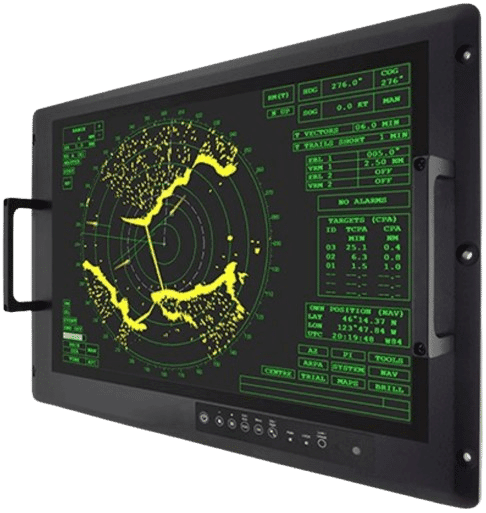
Mission-ready displays built for the toughest environments:
Whether it’s a command center, tactical vehicle, or naval platform, the SEA Series Military 4K Displays deliver crystal-clear visuals and the rugged reliability today’s defense programs demand.
Highlights:
- 4K UHD resolution for exceptional image clarity
- Available in 15″, 24″, 27″, 32″, and 40″ sizes
- MIL-STD-810G and MIL-STD-461E compliant
- Fanless, ventless design for improved reliability
- Optional PCAP multi-touch and optically bonded display
- Multiple mounting options for easy integration
Ideal for: Command & control systems, mobile operations centers, tactical vehicles, naval platforms, and other mission-critical applications.
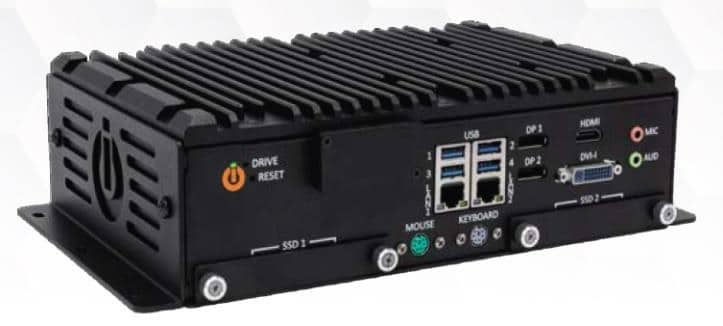
High-performance computing for mission-critical environments.
Designed for rugged military applications, the SRMC 9360 Series delivers the processing power needed for demanding defense systems while maintaining reliable fanless operation in extreme conditions. Its compact design makes it ideal for integration into vehicles, electronics enclosures, and larger mission platforms where space and reliability are critical.
Highlights:
- 12th Gen Intel® Core™ i7-12700TE processor
- Fanless design with an operating range of -40°C to 70°C
- 16GB wide-temperature DDR4 memory
- 512GB wide-temperature solid-state drive
- Integrated TPM 2.0 for hardware-based security
- Multiple display outputs, LAN ports, USB, COM, and GPIO for flexible system integration
Ideal for: Tactical vehicles, command and control systems, surveillance platforms, mobile operations centers, and other rugged military applications.
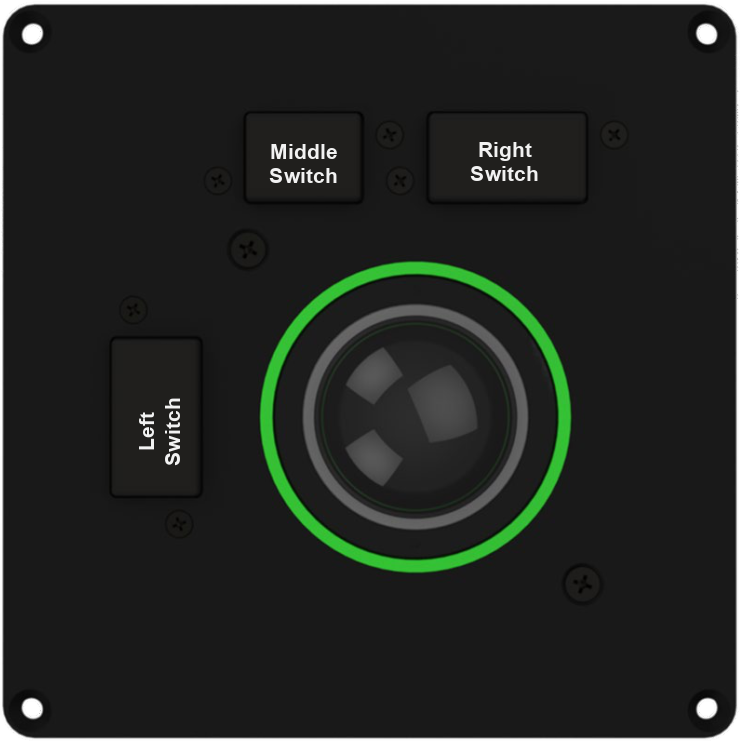
Precise control when every movement matters.
The F50 Rugged Trackball is built for military and industrial environments where traditional pointing devices simply aren’t practical. Designed for smooth, accurate operation in harsh conditions, it provides reliable cursor control even in high-vibration and low-light environments.
Highlights:
- 50.8mm epoxy resin trackball with precision ballistic tracking
- Three integrated buttons with a 1 million cycle lifespan
- Anti-vibration technology for improved cursor stability
- Green HALO illumination for low-light operation
- IPX5 rated and tested to MIL-STD-810 environmental standards
- Operating temperature from -45°C to +70°C
Ideal for: Command and control stations, tactical vehicles, naval systems, operator consoles, and other rugged military applications.
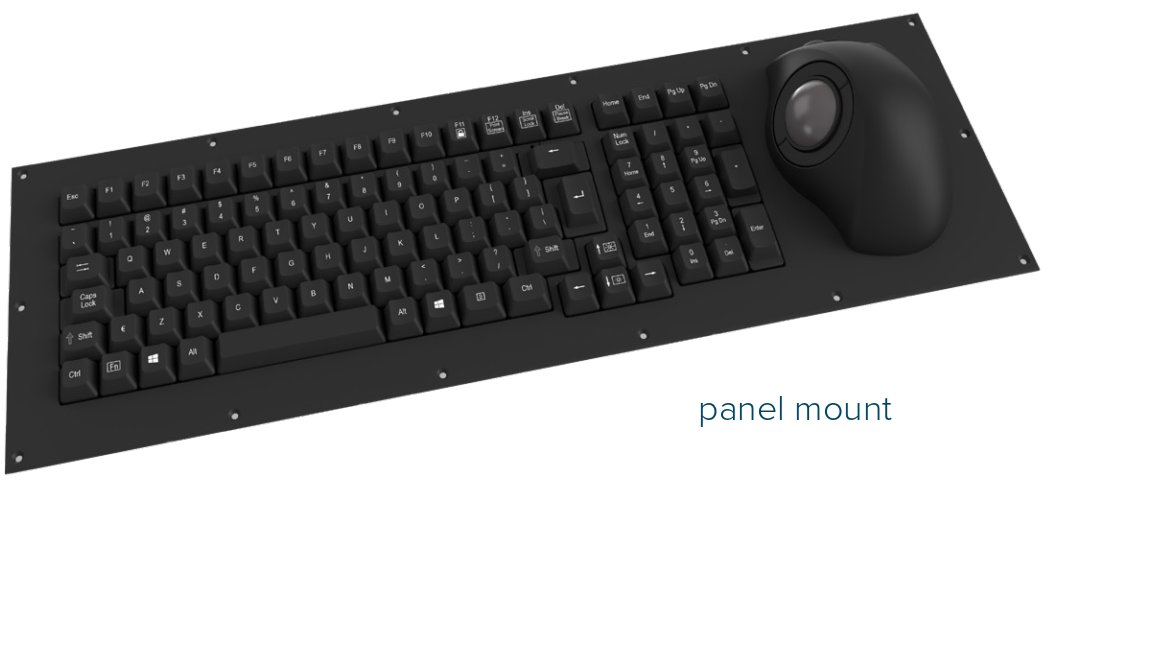
Built for reliable performance in the toughest environments.
The MKBE104 MIL-SPEC Rugged Keyboard combines a full-size keyboard with an integrated trackball, providing dependable control for mission-critical defense and industrial applications. Designed to meet military standards, it delivers consistent performance in harsh environments where durability is essential.
Highlights:
- Designed to meet MIL-STD-810G and MIL-STD-461G
- IP65 sealed against dust and water
- Integrated 38mm rugged trackball with precision optical tracking
- Backlit keys for low-light and nighttime operation
- 10 million key actuations for long service life
- Rugged aluminum enclosure with customizable layouts and NVIS backlighting options
Ideal for: Command centers, tactical vehicles, naval platforms, mobile operations centers, and other military operator workstations.